01
Custom Software Development
Business-critical applications designed around a real operating model, delivered in reviewable increments.
Software engineering · Custom systems · Cloud platforms
Garden Delights GmbH designs and builds custom software, cloud platforms and integrations for organisations whose operations depend on the result. We work in the open: written decisions, reviewable code and software that a client team can continue to run.

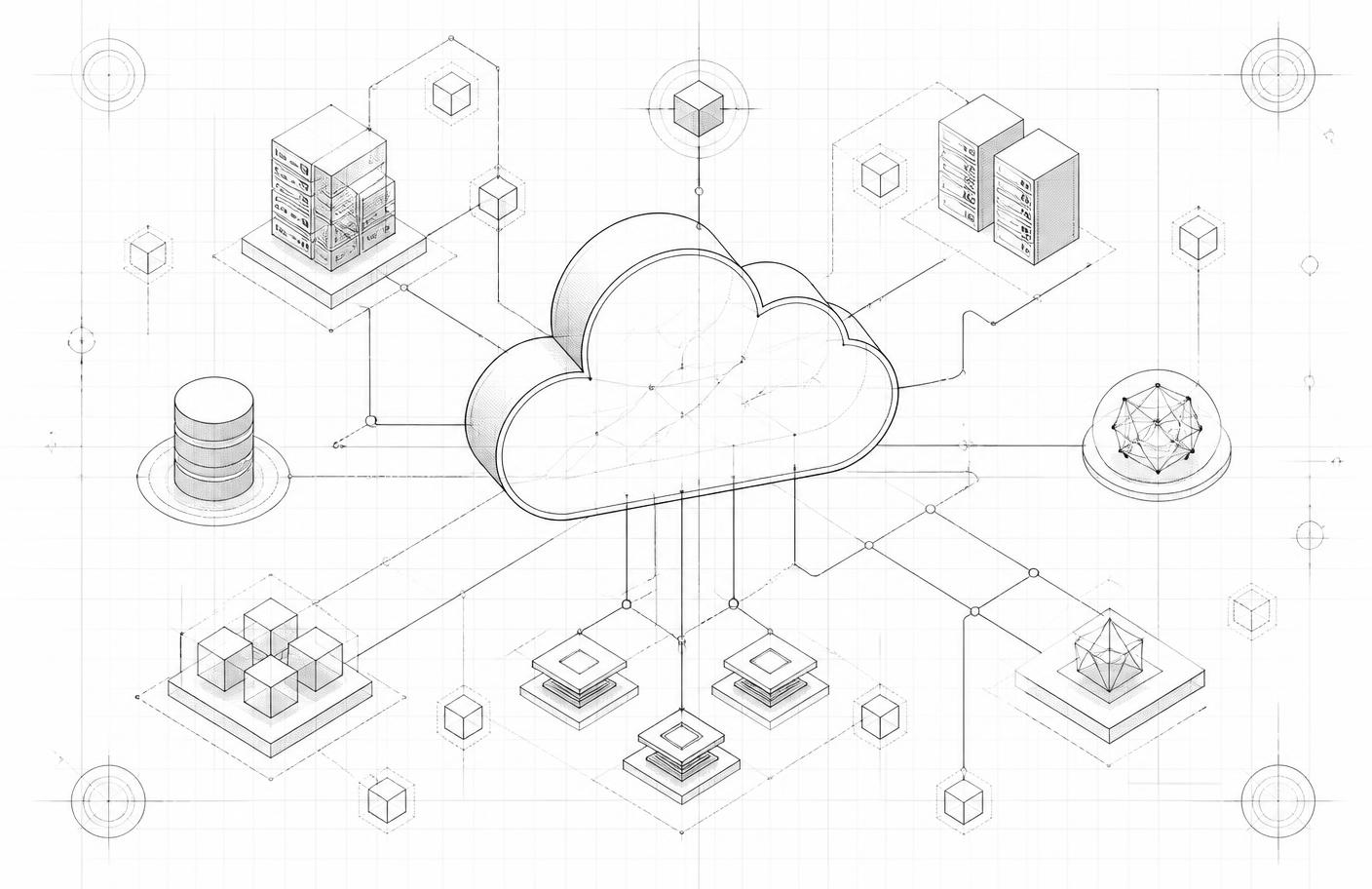
Fig. 01 — Infrastructure our applications are designed to run on.
01Introduction
Garden Delights GmbH builds software for organisations that need a system to behave correctly every day, not only on the day it is demonstrated. Our work usually begins where an existing process has outgrown the tools supporting it — manual reconciliation, disconnected systems, or an application that has become expensive to change.
We keep teams small and directly involved. The engineers who write the code take part in the discovery conversations, so requirements are not translated through several layers before they reach an implementation.
We describe what we can do and how we intend to do it, and we put those commitments in writing before work starts. Where something is uncertain, we say so and plan a way to reduce the uncertainty.
02Core services
01
Business-critical applications designed around a real operating model, delivered in reviewable increments.
02
Responsive, accessible web platforms with predictable performance budgets and maintainable front-end architecture.
03
Infrastructure as code, containerised workloads and deployment pipelines that can be reproduced from a repository.
04
Contract-first interfaces between internal systems and third-party services, with explicit error and retry behaviour.
05
Pipelines, models and reporting surfaces built on documented definitions rather than ad-hoc spreadsheets.
06
Incremental refactoring and platform migration for systems that must keep running while they change.
The full catalogue, including consulting and maintenance, is described on the services page.
03Contexts we work in
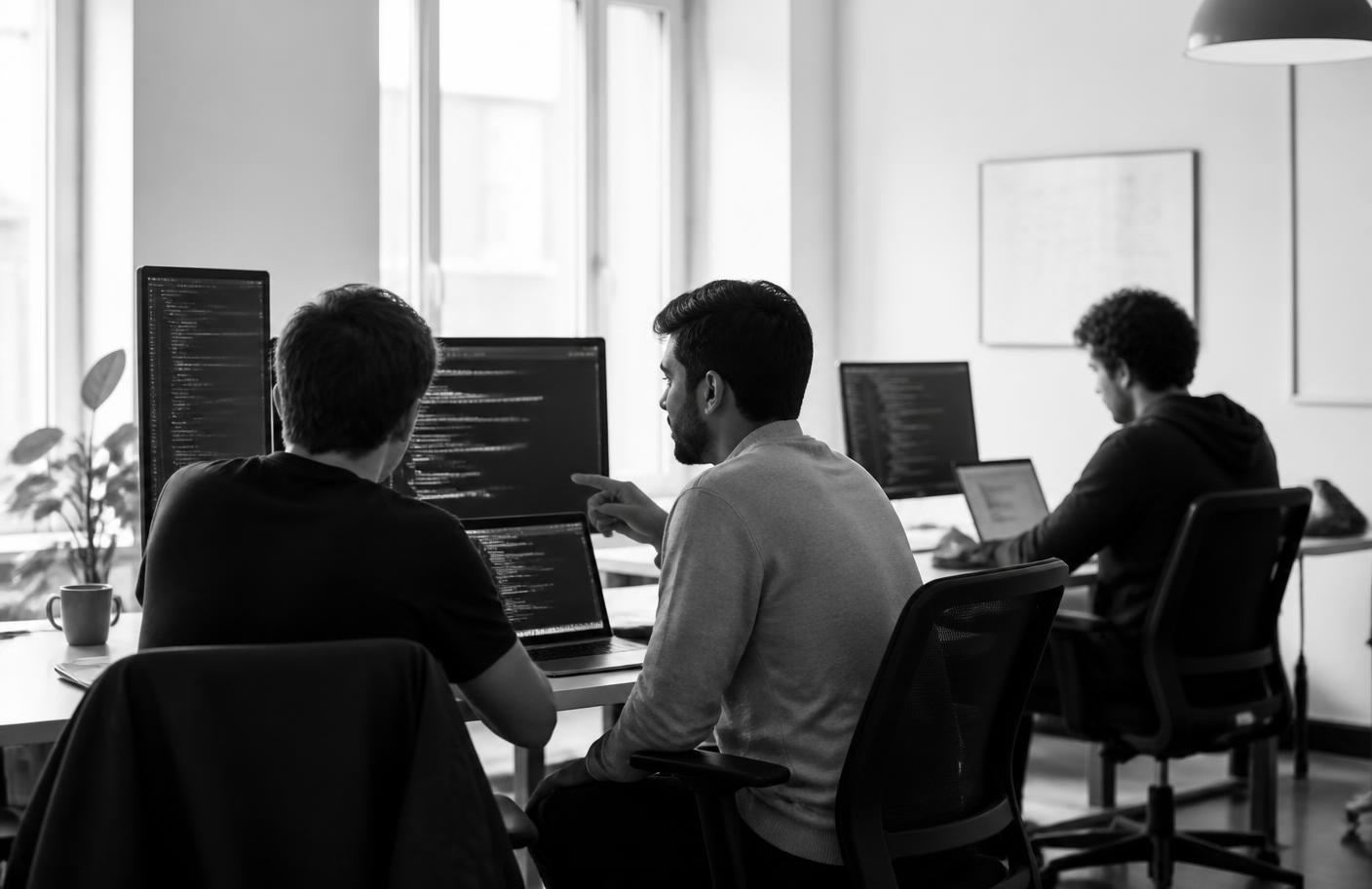
Operational tooling for planning, tracking and reconciliation, where downtime has an immediate physical cost.
Internal platforms that replace fragmented spreadsheets with consistent records, permissions and audit trails.
Product engineering for teams that need to move from a validated prototype to a maintainable production system.
Software written with traceability in mind: documented decisions, controlled access and reviewable change history.
04 — Technology capabilities
We favour mature, well-documented technology and introduce something new only when it removes a concrete constraint. The table below reflects what we work with regularly.
05Development process
We map the current process, the systems already in place and the constraints that cannot be moved. The output is a written problem statement, not a proposal deck.
We define boundaries, data ownership and interfaces before implementation, and record the trade-offs behind each decision.
Work moves in short iterations. Every change is reviewed, tested and shipped through the same automated pipeline.
Automated tests, manual verification against acceptance criteria and performance checks run before a release is considered complete.
Monitoring, logging and documented runbooks make the system supportable by the people who own it after handover.
06Why Garden Delights GmbH
You speak to the people writing the software, not only to an account manager.
Architecture notes, trade-offs and open questions are recorded and shared.
Infrastructure, pipelines and documentation live in your repository.
If a requirement is unclear or unrealistic in the given time, we say so before committing.
07Security and quality
Security considerations enter at design time. We define who may access what, how credentials are stored and rotated, and which data leaves the system boundary. Input is validated at the edge, permissions are enforced server-side, and dependencies are kept current.
Quality is enforced by the same pipeline that ships the software: automated tests, static analysis and code review run on every change. Releases are reproducible, and logging and metrics are added while a feature is being built rather than after an incident.

08Collaboration principles
One prioritised list, visible to everyone, with a single owner for each item.
Working software at the end of each iteration instead of status summaries.
Written decisions in a shared channel so context survives holidays and handovers.
We teach as we build; your engineers can review, extend and operate the result.
09Company values
Plain language in documentation, estimates and status. Ambiguity is treated as an unresolved requirement.
Decisions are recorded, code is reviewed and assumptions are tested rather than inherited.
We prefer the smallest system that solves the problem and can be understood by the next engineer.
The team that designs a component stays responsible for how it behaves in production.
Documentation, tests and readable structure so the software outlives any single contributor.
For the client's domain knowledge, for the users of the system and for the constraints of their environment.
10Contact information
Further details are listed on the contacts page.